What Those Marks on Your Car Actually Mean
The shorthand written on your panels before any repair starts isn't careless. It's how the whole shop stays on the same page once your car leaves the estimator's hands.
September 2, 2026 · 3 min read
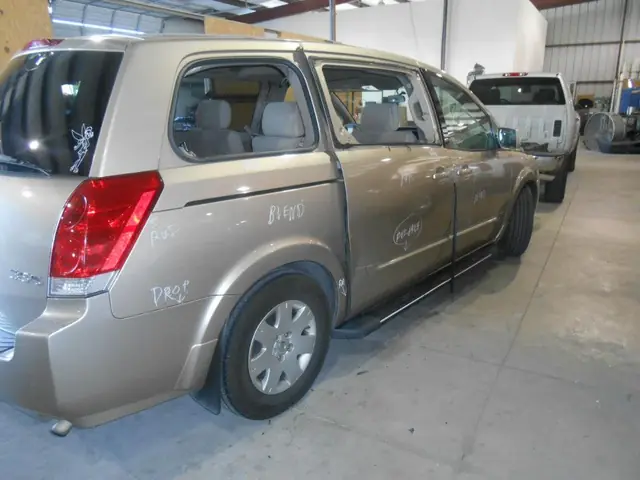
When you drop a car off for a damage estimate, someone walks around it with a grease pencil or a paint marker and starts writing directly on the panels. If you've never seen it before, it looks a little alarming, like your car has been graffitied before anyone's even touched it. It hasn't. There's a reason the notes go on the metal instead of staying on a clipboard.
Why the notes travel with the car, not the paperwork
A written estimate can get filed, left in an office, or handed off between people who never actually see the vehicle. Marks on the panel travel with the car itself. A technician who picks up the job three days later, and who never spoke to the estimator, can look at a door and know immediately what was agreed to. It's a low-tech solution to a problem every shop has: keeping everyone working on the same vehicle in sync without a meeting every time it changes hands.
This isn't unique to any one shop. The exact abbreviations shift a little from region to region and even technician to technician, but the logic behind writing directly on the car is standard across the collision repair trade.
A short list worth knowing before you look at your own car
- BLEND, the new paint on a repaired panel has to be feathered into the clear coat of the panel next to it so the color transition disappears rather than stopping in a hard line. A BLEND mark on a panel that was never hit isn't a mistake. It's a note to the paint department that this panel needs attention too, just not repair.
- R+I, remove and install. A part comes off, gets set aside clean, and goes back on once whatever's underneath or behind it is finished. It isn't being replaced with a new part, just moved out of the way and returned.
- DROP, a scheduling note rather than a damage note. It flags a part or panel that has to come off before the vehicle goes into a paint booth or onto a frame rack, so the next station already knows to expect it removed.
None of these marks are permanent. They get sanded and primed over as part of the normal repair sequence, and on any part that's being replaced outright, the mark simply leaves with the old part. If you pick your car up and can still read grease pencil on a finished panel, that's worth a question, not because it's dangerous, but because it usually means a step in the process got skipped somewhere.
Why marks show up on panels you never damaged
This is the part that catches most people off guard. Your car gets hit on the rear quarter panel, but the estimator also marks the door in front of it and sometimes the panel behind that one too. Nothing is wrong with either of those panels. What's happening is color. Factory paint fades slightly with age and sun exposure, so brand new paint mixed to the exact factory formula can read a shade different than paint that's been baking on your car for a few years, even out of the same can with the same code. Blending the edge of the new paint into the panel next door, instead of stopping hard at the seam, is what makes a repair disappear instead of looking like a patch that was bolted on.
What to ask before the car goes back in the shop
You don't have to be able to read grease pencil shorthand to have a useful conversation about your car. A few plain questions get you most of the way there.
- Which panels are actually being repaired, and which are only being blended for color match
- Whether a part is being removed and reinstalled, or replaced outright with a new one
- What happens if a part that's on order turns out to be damaged or doesn't fit when it arrives
A shop that's used to walking customers through this kind of thing won't mind explaining it panel by panel while your car is still in the lot. It's a lot easier to get a straight answer standing next to the vehicle than it is after the panel is already primed and the marks are gone for good.
C & C Collision Center LLC, 254-848-7008
Call 254-848-7008More articles
How to Read a Collision Estimate Without Being an Expert
An estimate is trying to answer one question, what it costs to put your vehicle back the way it was, and most of the confusion in reading one comes down to a handful of terms.
Why Matching Paint on a Ten-Year-Old Truck Is Harder Than Painting a New One
A paint code tells a shop what color your truck left the factory in. It doesn't tell them what color it is now, after years of Texas sun on some panels and not others.